
How Do You Turn Anger Into Action? We Did It When We Created WASPGirls.com
 Anger gets a bad rap. It’s the one emotion men often tell women to suppress. Men tell us to “calm down,” or worse, to ignore us altogether. However, you’re standing at the edge of frustration. You are worn thin by injustice or overlooked again in your job. The fire in your chest you are feeling isn’t something to be ashamed of. It’s a sign, a signal and a tool that can turn our anger into action. That was our motivation for creating WASPGirls.com.
Anger Wasn’t Just Noise — It Was A Message
Like most people, we didn’t always know how to manage our anger. It would show up unannounced. Anger shows it face during an argument or reading the news. It comes along when you feel you are stuck in place while everyone else seemed to move forward. At first, it was just a burning discomfort and a restless voice screaming, “This isn’t right.”
But the turning point came when we stopped brushing it off. We started asking better questions:
Why am I really angry? What is this emotion trying to tell me?
We realized something crucial — anger was pointing us toward values we felt were being threatened. It was the emotional red flag waving when boundaries were crossed or needs were unmet. And once we started paying attention, we stopped reacting blindly and started responding with purpose.
From Emotional Overwhelm to Constructive Energy
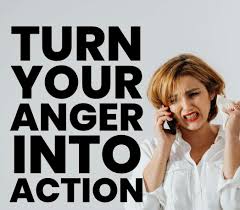 We learned the hard way that suppressing anger only leads to more stress, more tension, and more internal chaos. What helped was reframing it. Instead of viewing anger as a problem, we began treating it like fuel.
This transformation began with reflection. Through journaling and mindfulness, we started sorting through the tangle of emotions. Meditation helped us slow down just enough to observe what was beneath the surface. Were we feeling disrespected? Ignored? Misunderstood? Once identified, those roots became starting points for change.
Then came the practical side. When anger boils up, we’d take five deep breaths, count to ten, or take a walk. This is not to bury the emotion but to buy ourselves time to think clearly. That small pause made space for better choices and bigger moves.
The Breakthrough: Anger As a Catalyst for Change
Sometimes we think we’re just annoyed at a situation. However, in reality, we’re hungry for something better. That’s what we discovered in the middle of our frustration. Anger wasn’t a wall; it was a window into what we truly cared about.
That’s when we began setting concrete goals. We stopped ranting and started writing. We broke down our problems into action steps. One of us started a petition to change workplace policy. Another began organizing neighborhood clean-ups to protest city neglect. Some joined therapy. Others went back to school. Every choice came from the same place: we were angry enough to do something, not just feel something.
Turning emotion into motion changed everything.
Relationships Changed — Because We Did
Of course, it wasn’t just about what we did alone. Anger doesn’t live in a vacuum — it shows up in relationships. And unmanaged anger can destroy them just as quickly as it lights the fire in us.
So we worked on how we communicated it. We replaced shouting with real conversations. We practiced saying things like, “I feel frustrated when I’m not heard,” instead of “You never listen to me!”
That simple shift opened doors and it invited empathy.
Not everyone was ready to meet us halfway, but that was okay, too. What mattered was that we started expressing our needs. We did it without blame. In return that gave people the chance to meet us in a more human, honest space.
We started asking questions instead of making assumptions. And in return, we were often surprised by the shared struggles others had kept hidden, too. Relationships deepened. Some ended. Some healed. But they were real — and that mattered.
At Work, Anger Became Our Advantage
No one talks about anger in the office. But the truth is, it’s there. In the passive-aggressive emails. The resentment after being passed over. The frustration of not being heard.
We stopped swallowing that frustration and began channeling it. Instead of stewing in silence, we got curious: What’s missing here? What can I contribute that might improve things? Some of us started pitching ideas in meetings, even if our voices trembled. Others built tools or suggested policy changes.
That tension that used to gnaw at us at 2 AM? We started writing it out. Then, shaping it into proposals or creative solutions. Anger became a source of innovation, not just irritation. And even when the changes were slow, we weren’t helpless anymore — we were participating.
Not Perfect — But Progressing
Let’s be clear: transforming anger isn’t about pretending you’re calm. It’s not about always being “nice” or never feeling upset. It’s about ownership. About turning a feeling that once overwhelmed us into something that drives us forward.
Sometimes we still mess up and we snap and we stew. Yes, we also forget to breathe. But the difference now is, we come back to the tools that work: self-awareness, communication, and most importantly, action.
We’ve also learned to celebrate progress. No matter how small. Whether it’s sending an email we’ve been avoiding. We show up to a community meeting, or just saying “no” when our boundaries are crossed. Every step we take in response to anger builds strength. And that strength doesn’t just heal us — it often inspires others too.
Turning Pain Into Power
Anger doesn’t have to be destructive. When understood, acknowledged, and directed with care, it becomes one of the most honest and empowering emotions we have.
It tells us something isn’t right. And with the right tools — reflection, breathing, communication, and goal-setting — we can do more than survive anger. We can build with it.
So next time that fire rises in your chest, listen to it. Sit with it. Then ask yourself: What am I going to do with this power?